Marma Chikitsa
A traditional practice of sensitivity, gentle touch and attentive learning. Explore Marma through Ayurvedic ideas of prana, with safety and personal awareness at the center.
What is marma?
The Sanskrit word Marma means 'sensitive, delicate, secretive'. Ayurved describes 107 vital points in the body which, if mishandled or struck hard, can cause serious harm.
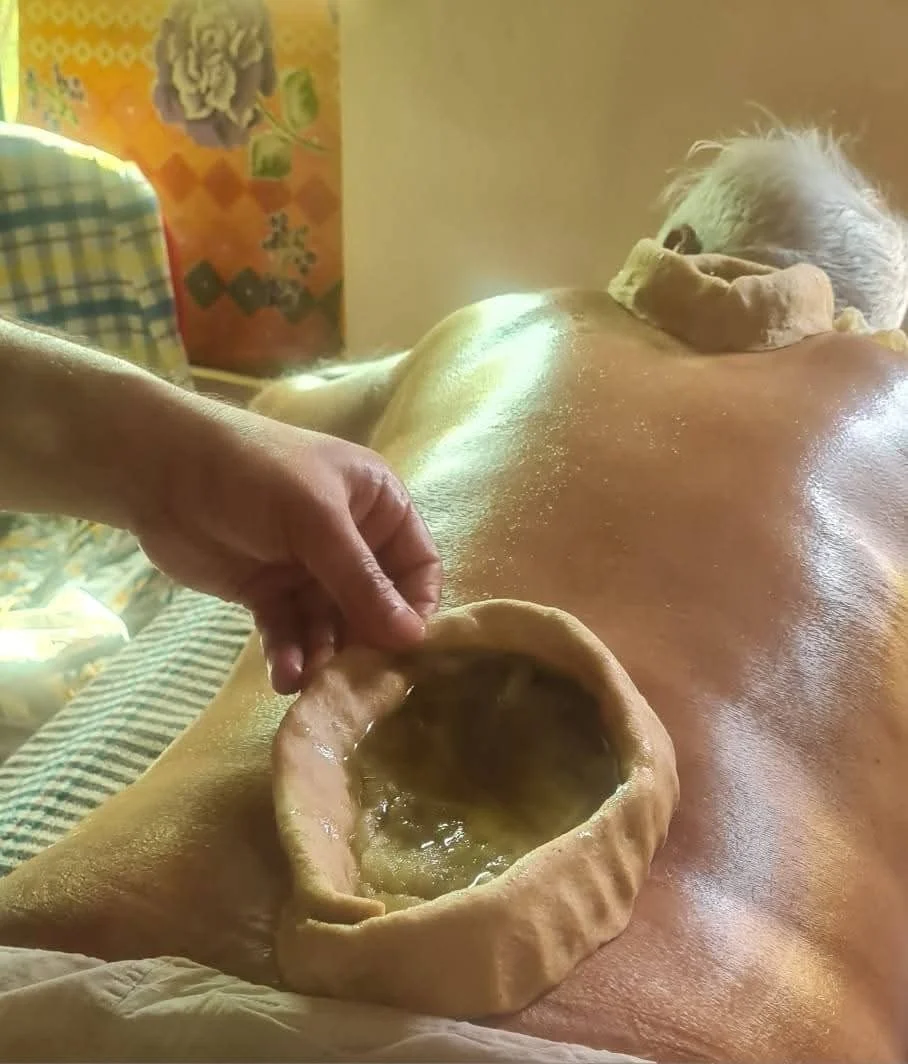
Gentle, calibrated pressure with the tips of thumbs or fingers, with utmost caution, on specific marma points is traditionally used to support the flow of prana and blood circulation, and many people find it helps ease pain and discomfort. Results vary with the cause of discomfort.
Gentleness before intensity
The aim is attentive, appropriate contact—not force. Learning includes knowing when to pause, when not to practice and when to seek professional advice.
The safety-breaker analogy
A gentle reset, not a forceful push.
Marma points are like the circuit breakers and junction boxes provided as safety mechanisms in electrical wiring.
This is an illustration of a traditional idea, not a literal description of the body’s electrical systems or evidence of a medical effect.
Movement and Marma
A foundation in movement
Sookshma Vyayaam and yogic postures are understood to stimulate marma points indirectly through movement, stretch and awareness.
Begin with the whole person.
Subtle joint exercises introduce a relationship between breath and movement. Yogic postures build on that foundation, encouraging a steady practice rather than a search for isolated points.
A guided course connects these traditions gradually. You need not begin by applying pressure: observation, posture and awareness are meaningful first steps.
Explore the learning programsSafety first
- Only safe marma points are taught to the general public so that accidental damage can be minimised.
- More vital marma points are never pressed directly but indirectly, through Marma-Pran-Asan.
- Learn under a trained teacher, practice first on yourself, then on immediate family, and only after gaining proficiency offer marma therapy to others, always within one's own capability.
- Marma is not a substitute for medical care.
A guided learning journey
For curious beginners, regular Yog practitioners and learners seeking a grounded introduction to traditional wellness. Individual suitability matters more than prior experience.
- 1
Discuss
Share your interests, prior experience and any concerns before choosing a course.
- 2
Observe
Learn the language of sensitivity, safe boundaries and the role of gentle touch.
- 3
Practice
Begin on yourself with supervised, well-known safe points and mindful movement.
- 4
Integrate
Build a measured personal practice and revisit questions with your teacher.
Training partners
- MOU with Uttarakhand Ayurved University, Dehradun, for exchange programs.
- Visiting faculty at Sri Ram Himalayan University School of Yoga, Jolly Grant, Rishikesh.
- Honorary Visiting Professor, Opole Polytechnic University, Poland.
- Vice President, European Confederation of Yoga Institutions.
Explore Marma with care.
Begin with questions, a clear understanding of safety and a learning path appropriate to you.